

Kebetkache Women
Development & Resource Centre
Restoring Dignity, Health, and Environmental Justice for Women of the Niger Delta
KinHub
Profile
-
Goal: $0.25M (Covering expanded data collection, integrated advocacy, community healing services, environmental restoration, and core institutional strengthening.)
Critical Outcomes:
Generate robust, scientifically grounded health and environmental data from six oil-affected communities (480 women) to expose the long-term impacts of crude oil extraction
Strengthen the national and international advocacy campaign demanding environmental cleanup, compensation, and justice before oil companies divest.
Provide direct health support for women suffering from pollution-related illness.
Advance mangrove restoration and climate adaptation solutions led by frontline women.
Secure institutional resilience for Kebetkache: governance, MEL systems, digital presence, and independent office infrastructure.
-
Aligned: Kebetkache is a rooted, woman-led movement grounded in community, place, and the intergenerational wisdom of the Niger Delta.
The organization embodies protective, relational, justice-driven leadership — fully aligned with GrandMothering principles.
Kebetkache is ready for catalytic investment to anchor a national and international movement defending the rights, bodies, and lands of oil-affected women.
-
Ms. Emem Okon is a leading voice in environmental feminism and community-based resistance to ecological harm in the Niger Delta.
Under her leadership, Kebetkache has grown into a sanctuary of solidarity, organizing thousands of women to confront oil companies, demand environmental cleanup, and assert their right to health and livelihood.Her groundbreaking 2024 study on women’s health in Otuabagi — revealing dangerous levels of PAHs in women’s blood and widespread soil and water contamination — created a national wake-up call and opened pathways for legal and policy intervention.
Emem stewards Kebetkache as a KinHub of justice, healing, and collective action, merging scientific evidence, women’s lived experience, and local ecological wisdom.
-
Kebetkache works to ensure that women in oil-producing communities live in dignity, safety, and environmental health, and that multinational companies are held fully accountable for decades of abuse. Their approach integrates:
Women’s Environmental Justice Leadership
Scientific Research on Health & Pollution
Community Mobilization and Legal Empowerment
Climate and Biodiversity Restoration
Holistic Support for Affected Women
Kebetkache operates as a relational ecosystem of protection — centering women’s bodies, voices, and agency in the struggle for environmental and social repair.
-
Evidence-Based Research for Justice
National & International Advocacy
Mangrove Restoration & Climate Resilience
Healing & Holistic Support for Women
Institutional Strengthening
-
Nigeria is at a decisive moment.
Shell’s attempted 2024 divestment from SPDC — without cleanup or compensation — threatened to leave communities without recourse.
A wave of protests led by Kebetkache and partners successfully pushed the Nigerian government to reject the divestment deal.Right now, Shell is still clearly the legal owner of SPDC — and fully liable for decades of harm.
This creates a narrow and powerful opportunity to:
Gather comprehensive multi-community evidence
Launch coordinated national/international pressure
Enable litigation
Demand immediate cleanup and health redress
Key Funding Components
Data collection for 480 women in six communities
Health interventions and referrals
Advocacy and communications campaign
International coalition building
Climate and mangrove restoration
Institutional strengthening for Kebetkache
-
Women who speak out against oil companies face:
Political intimidation
Social ostracism
Gender-based threats
Suppression of community organizing
Deep patriarchal resistance
Environmental contamination also erodes:
Food systems
Women’s livelihoods
Health and reproductive wellbeing
Community cohesion
Kebetkache meets these risks with:
Collective women’s mobilization
International solidarity networks
Evidence-centered advocacy
Visibility that protects frontline defenders
As women say in the Delta:
“If we do not speak, we perish with our land.” -
Kebetkache embodies the GrandMothering principles of:
Protection of life
Intergenerational stewardship
Truth-telling
Communal care
Rootedness in place
Feminist leadership as ecological leadership
Their work reminds us that environmental justice is body justice — and that the healing of the Niger Delta begins with listening to the women who carry its pain in their blood.
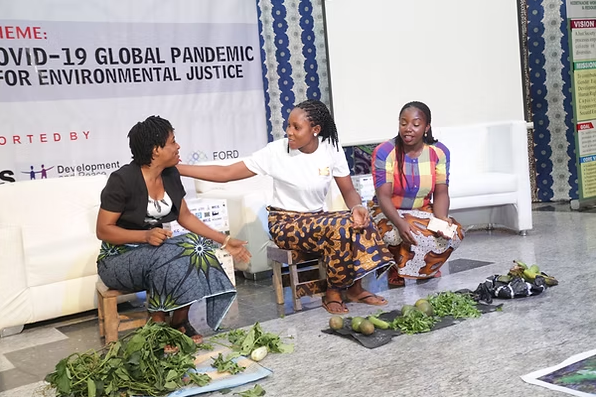
Support Kebetkache Women Development & Resource Centre in securing justice for oil-affected women and in restoring the ecosystems that sustain life in the Niger Delta.
Your investment will:
Strengthen a national movement of women demanding accountability
Generate the evidence needed for legal and policy breakthroughs
Restore mangroves and local ecologies
Support women’s health and healing
Protect communities during a decisive moment in Nigeria’s extractive history